Friday, April 21, 2006

The California Governor flexes his political muscle

Governor Schwarzenegger FINALLY flexed his political muscle in aggression against an elected official. However in true "moderate" Republican fashion he flexed them at a Conservative Republican - President Bush. The President has come to California for a series of events and according to published reports, "Gov. Schwarzenegger and President Bush Spoke briefly about federal funding for the California's ailing Levee system and immigration.

Gov. Schwarzenegger seems to be finding ways to maintain a healthy political distance from president in order to please his politicaly violent domestic partner - the California Left-Wing Liberal.

They have convinced him of global warming, the need for raising the minimum wage and anmesty, and he is even screeching that the federal government has not "learned its lesson on Katrina."

The California budget is large enough to solve both the levee problems and illegal immigration. Gov. Schwarzenegger's problem lies with his timidity to flex on Democrats, not Republicans. When the Governor decides to be aggressive with Democrats and "join Republicans", he will finally make the advances to solve this nation's problems.

I hope to someday be able to write SOMETHING about
Gov. Schwarzenegger being a team player and fighting "with" republicans as opposed to this constantly "joining Left-Wing Liberals" in their fight against Republicans.

Friday, April 7, 2006

Great Economic News!!


The Jobless rate is 4.7%

That is lower than the jobless rates of all any modern Democrat President in the 20th Century (That includes the Clinton Administration).

Please do not look for this good
Republican News

in your local News Paper!!

Wednesday, April 5, 2006

Mexico's Glass House

How the Mexican constitution treats foreign residents, workers and naturalized citizens
by J. Michael Waller

Introduction
Every country has the right to restrict the quality and quantity of foreign immigrants entering or living within its borders. If American policymakers are looking for legal models on which to base new laws restricting immigration and expelling foreign lawbreakers, they have a handy guide: the Mexican Constitution (English, Spanish)

Adopted in 1917, the constitution of the United Mexican States borrows heavily from American constitutional and legal principles. It combines those principles with a strong sense nationalism, cultural self-identity, paternalism, and state power. Mexico's constitution contains many provisions to protect the country from foreigners, including foreigners legally resident in the country and even foreign-born people who have become naturalized Mexican citizens. The Mexican constitution segregates immigrants and naturalized citizens from native-born citizens by denying immigrants basic human rights that Mexican immigrants enjoy in the United States.

By making increasing demands that the U.S. not enforce its immigration laws and, indeed, that it liberalize them, Mexico is throwing stones within its own glass house. This paper, the first of a short series on Mexican immigration double standards, examines the Mexican constitution's protections against immigrants, and concludes with some questions about U.S. policy.

Summary
In brief, the Mexican Constitution (English, Spanish) states that:
- Immigrants and foreign visitors are banned from public political discourse.
- Immigrants and foreigners are denied certain basic property rights.
- Immigrants are denied equal employment rights.
- Immigrants and naturalized citizens will never be treated as real Mexican citizens.
- Immigrants and naturalized citizens are not to be trusted in public service.
- Immigrants and naturalized citizens may never become members of the clergy.
- Private citizens may make citizens arrests of lawbreakers (i.e., illegal immigrants) and hand them to the authorities.
- Immigrants may be expelled from Mexico for any reason and without due process.

The Mexican constitution (English, Spanish): Unfriendly to immigrants
The Mexican constitution expressly forbids non-citizens to participate in the country's political life. Non-citizens are forbidden to participate in demonstrations or express opinions in public about domestic politics. Article 9 states, "only citizens of the Republic may do so to take part in the political affairs of the country." Article 33 is unambiguous: "Foreigners may not in any way participate in the political affairs of the country."

The Mexican constitution denies fundamental property rights to foreigners. If foreigners wish to have certain property rights, they must renounce the protection of their own governments or risk confiscation. Foreigners are forbidden to own land in Mexico within 100 kilometers of land borders or within 50 kilometers of the coast. Article 27 states,
"Only Mexicans by birth or naturalization and Mexican companies have the right to acquire ownership of lands, waters, and their appurtenances, or to obtain concessions for the exploitation of mines or of waters. The State may grant the same right to foreigners, provided they agree before the Ministry of Foreign Relations to consider themselves as nationals in respect to such property, and bind themselves not to invoke the protection of their governments in matters relating thereunto; under penalty, in case of noncompliance with this agreement, of forfeiture of the property acquired to the Nation. Under no circumstances may foreigners acquire direct ownership of lands or waters within a zone of one hundred kilometers along the frontiers and of fifty kilometers along the shores of the country." (Emphasis added)
The Mexican constitution denies equal employment rights to immigrants, even legal ones, in the public sector. Article 32: "Mexicans shall have priority over foreigners under equality of circumstances for all classes of concessions and for all employment, positions, or commissions of the Government in which the status of citizenship is not indispensable. In time of peace no foreigner can serve in the Army nor in the police or public security forces."

The Mexican constitution guarantees that immigrants will never be treated as real Mexican citizens, even if they are legally naturalized. Article 32 bans foreigners, immigrants, and even naturalized citizens of Mexico from serving as military officers, Mexican-flagged ship and airline crew, and chiefs of seaports and airports:
"In order to belong to the National Navy or the Air Force, and to discharge any office or commission, it is required to be a Mexican by birth. This same status is indispensable for captains, pilots, masters, engineers, mechanics, and in general, for all personnel of the crew of any vessel or airship protected by the Mexican merchant flag or insignia. It is also necessary to be Mexican by birth to discharge the position of captain of the port and all services of practique and airport commandant, as well as all functions of customs agent in the Republic."
An immigrant who becomes a naturalized Mexican citizen can be stripped of his Mexican citizenship if he lives again in the country of his origin for more than five years, under Article 37. Mexican-born citizens risk no such loss.

Foreign-born, naturalized Mexican citizens may not become federal lawmakers (Article 55), cabinet secretaries (Article 91) or supreme court justices (Article 95).

The president of Mexico, like the president of the United States, constitutionally must be a citizen by birth, but Article 82 of the Mexican constitution mandates that the president's parents also be

Mexican-born citizens, thus according secondary status to Mexican-born citizens born of immigrants.

The Mexican constitution forbids immigrants and naturalized citizens to become members of the clergy. Article 130 says, "To practice the ministry of any denomination in the United Mexican States it is necessary to be a Mexican by birth."

The Mexican constitution singles out "undesirable aliens." Article 11 guarantees federal protection against "undesirable aliens resident in the country."

The Mexican constitution provides the right of private individuals to make citizen's arrests. Article 16 states, "in cases of flagrante delicto, any person may arrest the offender and his accomplices, turning them over without delay to the nearest authorities." Therefore, the Mexican constitution appears to grant Mexican citizens the right to arrest illegal aliens and hand them over to police for prosecution.

The Mexican constitution (English, Spanish) states that foreigners may be expelled for any reason and without due process. According to Article 33, "the Federal Executive shall have the exclusive power to compel any foreigner whose remaining he may deem inexpedient to abandon the national territory immediately and without the necessity of previous legal action."

Notional policy options
Mexico and the United States have much to learn from one another's laws and practices on immigration and naturalization. A study of the immigration and citizenship portions of the Mexican constitution leads to a search for new policy options to find a fair and equitable solution to the immigration problem in the United States.

Two contrary options would require reciprocity, while doing the utmost to harmonize U.S.-Mexican relations:
  1. Mexico should amend its constitution to guarantee immigrants to Mexico the same rights it demands the United States give to immigrants from Mexico; or
  2. The United States should impose the same restrictions on Mexican immigrants that Mexico imposes on American immigrants.
These options are only notional, of course. They are intended only to help push the immigration debate in a more sensible direction. They simply illustrate the hypocrisy of the Mexican government's current immigration demands on the United States - as well as the emptiness of most Democrat and Republican proposals for immigration reform.

Mexico certainly has every right to control who enters its borders, and to expel foreigners who break its laws. The Mexican constitution is designed to give the strongest protections possible to the country's national security. Mexico's internal immigration policy is Mexico's business.

However, since Mexican political leaders from the ruling party and the opposition have been demanding that the United States ignore, alter or abolish its own immigration laws, they have opened their own internal affairs to American scrutiny. The time has come to examine Mexico's own glass house.

Friday, March 31, 2006

None Dare Call Her "Xenophobe" or "Racist"

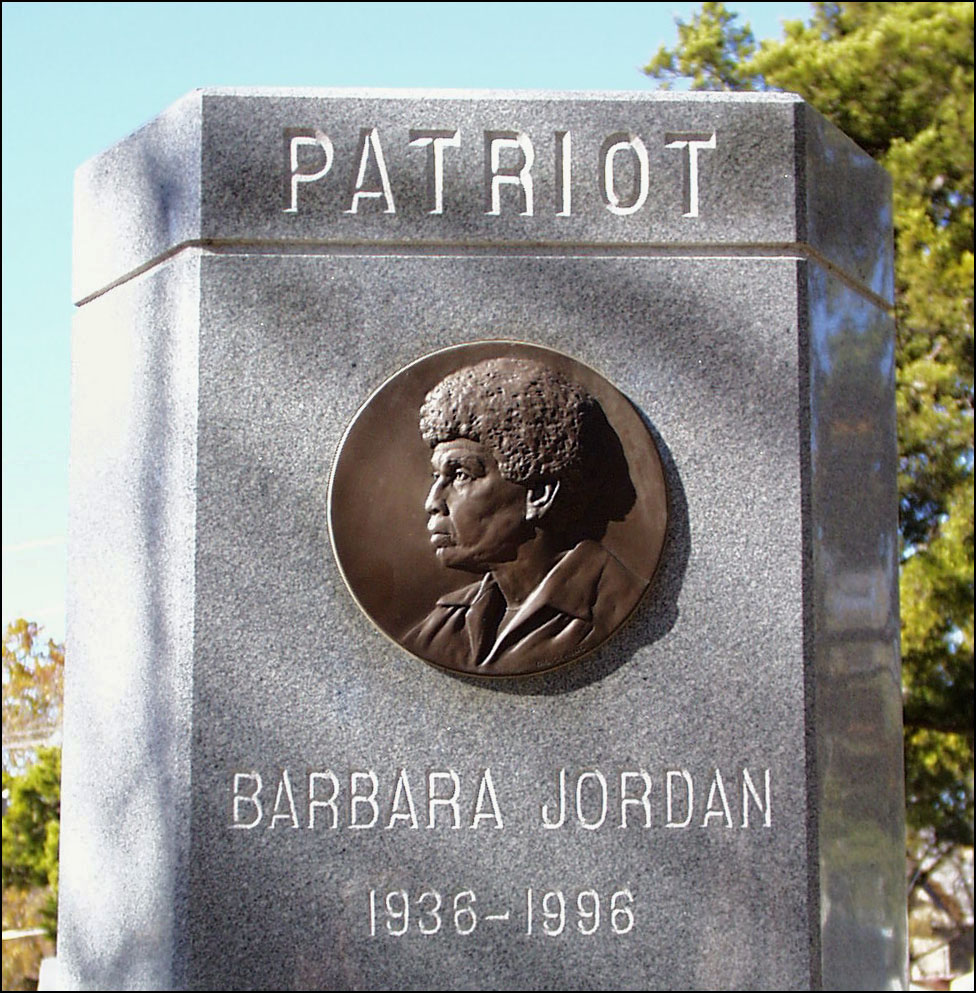
In 1972, Texas State Representative Barbara Charline Jordan, was the first African-American woman ever elected to Congress from a southern state. On July 12, 1976 congresswoman Jordan became the first African American to ever deliver a keynote speech at the Democratic National Convention.

The late Congresswoman was appointed by President Bill Clinton to chair a Commission on Immigration Reform (aka the Jordan Commission). She chaired the Commission from 1993 almost until her Death in January 1996. The Commission's work was born by statute in 1990 and concluded by statute in 1997., Unfortunately, President Bill Clinton did not think enough of the Commission to implement the Commission's Recommendations.

Illegal aliens should not be eligible for any services or assistance except those made available on an emergency basis or for similar compelling reasons. - Benefits policies should send the same message as immigration policies.

Aliens should not have entered the U.S. unlawfully and, if they did, should not receive public-funded aid except in very unusual circumstances: where there is emergent need for specific assistance; where there is a public health, safety or welfare interest (such as immunizations, child nutrition programs and school lunch programs); and where their eligibility is constitutionally protected. The verification system recommended by the Commission should be used to determine eligibility for public benefits as well as work authorization.

If an alien is in the U.S. unlawfully, he or she should not receive publicly-funded aid except in very unusual circumstances: where there is emergent need for specific assistance, such as emergency health care; where there is a public health, safety or welfare interest (such as immunizations, programs to prevent the spread of communicable diseases, child nutrition programs and school lunch programs); and where their eligibility is constitutionally protected.

Why this distinction between the eligibility of legal immigrants and illegal aliens? Illegal aliens have no right to be in this country. They are not part of our social community. There is no intention that they integrate. As human beings, they have certain rights-we certainly should not turn them away in a medical emergency. As a nation, it is in our interest to provide a limited range of other services- immmunizations and treatment of communicable diseases certainly fall into that category. But, if illegal aliens require other aid, it should rightly be provided in their own countries.

Unlawful immigration will not be curbed unless we have comprehensive strategies that will prevent the entry of those with no right to be here and remove those who somehow make it past our best efforts at border management.

For immigration to continue to serve our national interest, it must be lawful. There are people who argue that some illegal aliens contribute to our community because they may work, pay taxes, send their children to our schools, and in all respects except one, obey the law. Let me be clear: that is not enough.

This is a nation governed by the rule of law. It applies to all. It is as illegal knowingly to hire someone who is breaking the law as it is illegal to work under false pretences. These recommendations are not just for the four million illegal aliens in our midst-an arguably small number given the size of the U.S. workforce. They are aimed, as well, at restoring credibility to our overall immigration policy, commitment to fair labor standards, respect for civil and human rights, and integrity of our social security system.

To make sense about the national interest in immigration, it is necessary to make distinctions between those who obey the law, and those who violate it. Therefore, we disagree, also, with those who label our efforts to control illegal immigration as somehow inherently anti-immigrant. Unlawful immigration is unacceptable.

...Deportation is crucial. Credibility in immigration policy can be summed up in one sentence: those who should get in, get in; those who should be kept out, are kept out; and those who should not be here will be required to leave. The top priorities for detention and removal, of course, are criminal aliens. But for the system to be credible, people actually have to be deported at the end of the process. The Commission will have additional recommendations on this crucial matter later this year.

First, Improve border management - The Commission calls for a strategy of prevention of illegal entry and facilitation of legal ones in the national interest.

Second, Reduce the magnet that jobs currently present for illegal immigration - We have concluded that illegal immigrants come primarily for employment. The Commission believes that we need to enhance our enforcement of both employer sanctions and labor standards. But, to make employer sanctions work, we must improve the means by which employers verify the work authorization of new employees.

Third, the Commission urges greater consistency in our immigration and benefits policies - We believe that illegal aliens should be eligible for no public benefits other than those of an emergency nature, in the public health and safety interest, and constitutionally protected.

Fourth, the removal of criminal aliens - The Commission supports enhancement of the Institutional Hearing Program that permits the federal government to obtain a deportation order while criminal aliens are still serving their sentences...The Commission also recommends further negotiation of bilateral treaties that will permit deportation of criminal aliens to serve their sentences in their home countries.

Immigration policy must protect U.S. workers against unfair competition from foreign workers, with an appropriately higher level of protection to the most vulnerable in our society...

The Commission recommends [taking] additional steps to address the continued aftereffects of the 1986 Immigration Reform and Control Act that provided legal status to formerly illegal aliens. We propose a core immigration admissions level of 550,000 per year...

The Commission recommends the elimination of the admission of unskilled workers. Unless there is another compelling interest, such as in the entry of nuclear families and refugees, it is not in the national interest to admit unskilled workers, especially when the U.S. economy is showing difficulty in absorbing disadvantaged workers and efforts towards welfare reform indicate that many unskilled Americans will be entering the labor force.

The Commission believes that an agriculture guestworker program, sometimes referred to as a revisiting of the "bracero agreement," is not in the national interest and unanimously and strongly agrees that such a program would be a grievous mistake.

The Commission is highly skeptical of the need for an agricultural guestworker program at this time or in the near future. Proponents of such a program have failed to demonstrate that a labor shortage is about to occur or that there are no means other than a guestworker program available to agricultural producers to obtain sufficient employees in their industry.

Guestworker programs effectively expand rural poverty. Moreover, guestworker programs are predicated on limitations on the freedom of those who are invited to enter and work. Experience has shown that such limitations are incompatible with the values of democratic societies. For that very reason, "temporary" guestworkers tend to become permanent residents, de facto or even de jure. The ongoing inconsistency between the stated intent of a guestworker program and the actual consequences cannot be ignored by policymakers who seek credibility in a reformed system.

Do not let debate on birthright citizenship distract you from the urgent business of controlling illegal immigration, which is essential to the credibility of our commitment to the national interest in legal immigration...you have an opportunity in this Congress to take significant steps to deter illegal immigration and promote lawful immigration in the national interest. You have labored in this Subcommittee to produce a bill, H.R. 2202, which takes some of the prudent, measured steps recommended by this bipartisan Commission to do what needs to be done.

Please do not be distracted from these real measures to attack illegal immigration through the Constitutional amendment process. There are far better ways to deal with illegal immigration than to cut the Constitutional baby with a sword and say, "This half is a citizen, and that half is not."

There will be a vote on the House floor on retaining the provision to test worksite verification that the Judiciary Committee approved in H.R. 2202. There will be those who claim that it is not worth testing the system you have endorsed. There are also those who whisper in these hallways that illegal immigration isn't so bad, so long as they will work hard for low pay, so long as they do the dirty jobs that Americans supposedly won't do, so long as their children aren't to become Americans.

Caution: There are nations in the world that have tried this, and we are not like them. We are not a nation that is permanently divided into "us", and "them." You heard last week from my colleague on the Commission, Richard Estrada, who gave as his view that the United States must not follow the Kuwait model, where citizens are the privileged elite and foreigners do the dirty work. I agree.

Wednesday, February 22, 2006

Terri Lynn Winchell was "Left-Winged" Out

Punishment denied for Torture, Murder, and Rape

On January 8, 1981, twenty-one-year-old Michael Morales murdered and raped seventeen year-old Terri Lynn Winchell, with his nineteen-year-old cousin, Rick Ortega. In early 1980, Ortega and seventeen-year-old Randy Blythe had a homosexual relationship. During this time, Blythe also had a dating relationship with Terri Winchell. While Terri didn’t know about the homosexual relationship of Blythe and Ortega, Ortega knew about Blythe’s and Terri’s relationship. Ortega was extremely jealous of this relationship.

Ortega and Morales conspired to murder Terri as “pay back” for Terri’s involvement with Blythe. Ortega and Blythe had a stormy relationship. Ortega reacted in threatening manner to Blythe’s attempts to end their relationship. Ortega was also openly hostile towards Terri. In the weeks before the murder, Ortega set up a ruse to trick Terri into believing that Ortega wanted to make amends and become her friend. Morales “practiced” how he was going to strangle Terri, and told his girlfriend on the day of the murder how he was going to strangle and “hurt” someone.


The day of the murder, Ortega tricked Terri into accompanying him and Morales in Ortega’s car to a remote area near Lodi, California. There, Morales attacked Terri from behind and attempted to strangle her with his belt. Terri struggled and the belt broke in two. Morales then took out a hammer and began hitting Terri in the head with it. She screamed for Ortega to help and attempted to fight off the attack, ripping her own hair out of her scalp in the struggle. Morales beat Terri into unconsciousness, crushing her skull and leaving 23 identifiable wounds in her skull.


Morales took Terri from the car and instructed Ortega to leave and come back later. Ortega left and Morales then dragged Terri face-down across the road and into a vineyard. Morales then raped her while she lay unconscious. Morales then started to leave, but went back and stabbed Terri four times in the chest to make sure she died. Morales then left Terri, calling her “a fucking bitch,” as he walked away. Terri died from both the head and chest wounds. Her body was left in the vineyard naked from the waist down, with her sweater and bra pulled up over her breasts.


Morales confessed to killing Terri to jailhouse informant Bruce Samuelson, as well as his girlfriend Raquel Cardenas and his housemate Patricia Flores. Morales threatened both Cardenas and Flores prior to his trial so they would not testify about what he told them. Specifically, he admitted that he sat behind Terri after she had been lured into Ortega’s car, he put his belt around Terri’s neck and strangled her until the belt broke, he repeatedly hit her over the head with a hammer until she was unconscious, he took her out of the car and dragged her into a vineyard, he raped her, and he left her but then returned to be “sure” she was dead.


Within two days of the murder, Morales was arrested at his residence. The police found Morales’ broken belt, containing Terri’s blood, hidden under a bedroom mattress. The police also found three knives, the hammer bearing traces of blood hidden in the refrigerator vegetable crisper, and blood-stained floor matts from Ortega’s car in the trash. Terri’s purse and credit card were also in the house. Ortega’s blood-spattered car was impounded. Morales had used $11 from Terri’s purse to buy beer, wine, and cigarettes on the night of the murder.


So after all of this, U.S. District Judge Jeremy Fogel and retired Ventura County Superior Court Judge Charles McGrath are using their power as "judicial legislators" to ensure Morales' avoidance of his deserved execution. The idea the Morales must be comfortable when he is executed is beyond reasonable expectations in the carriage of justice.

Friday, January 6, 2006

So what about those warrantless searches

"Illegal" Warrantless Searches
Constitutional Authority of the President and National Security.
Internet Links and Resources

http://online.wsj.com/article/SB113513395228428163.html

"Wiretap Dance," by Ronald Kessler, Wall Street Journal , December 21, 2005

Commentary on problems with FISA, why the NSA intercepts are necessary.

http://www.newsmax.com/archives/ic/2005/12/20/131610.shtml

"FISA Court Approved Bush Spy Program," Newsmax.com , December 20, 2005

Previous court ruling gives the President power to conduct "warrantless searches" to obtain foreign intelligence.

http://www.chicagotribune.com/news/opinion/chi-0512210142dec21,1,3677848.story?ctrack=1&cset=true

"President Had Legal Authority to OK Taps," by John Schmidt, Chicago Tribune, December 21, 2005

Commentary on legal precedent and Constitutional authority of the President. Under Clinton, Deputy Attorney General Jamie Gorelick confirmed President's authority.

http://news.yahoo.com/s/nypost/20051227/cm_nypost/thegrayladytoyswithtreason

"The Gray Lady Toys With Treason," New York Post, December 27, 2005

Editorial on New York Times breaking story about Bush's "secret" warrantless eavesdropping, thus compromising national security. Cites Carter's and Clinton's use of warrantless searches.

http://www.washtimes.com/national/20051222-122610-7772r.htm

"'Warrantless' Searches Not Unprecedented," by Charles Hurt, Washington Times, December 22, 2005

Cites Clinton's (and previous administrations') use of warrantless searches, and quotes Clinton Deputy Attorney General Jamie Gorelick, including testimony before Intelligence Committee. Also cites court opinion upholding Presidential power for warrantless searches.

http://www.cnsnews.com/bozellcolumn/archive/2005/col20051228.asp

"Media Paint Bush As 'Dictator'," by L. Brent Bozell III, cnsnews.com, December 28, 2005

(Also ran as a commentary in Investor's Business Daily, headlined "Good or Evil? First Ask Who's In Oval Office," January 3, 2006)

Commentary citing media reaction to New York Times story, with Bush as a "dictator," yet Clinton didn't receive such labels when he used warrantless surveillance.

http://www6.lexisnexis.com/publisher/EndUser?Action=UserDisplayFullDocument&orgId=574&topicId=27012&docId=l:340405237&start=1

"Safety Net," Investor's Business Daily, December 28, 2005

Editorial on problems with relying on FISA, cites FISA denials for pre-9-11 warrants on Zacarias Moussaoui.

http://www.investors.com/editorial/IBDArticles.asp?artsec=20&artnum=1&issue=20060103&view=1

"Upper Echelon," Investor's Business Daily, January 4, 2006

Editorial, describes NSA's Echelon program as depicted on "60 Minutes."

http://www.investors.com/editorial/IBDArticles.asp?artsec=20&issue=20051222&view=1

"Unwarranted Flak," Investor's Business Daily , December 23, 2005

Editorial citing use of warrantless searches under Carter, Reagan and Clinton. Also cites U.S. Code for authority, and Nancy Pelosi's admission that she was advised.

http://www.drudgereport.com/flash8.htm

"Flashback: Clinton, Carter Search 'N Surveillance Without Court Order" drudgereport.com, December 21, 2005

Cites Clinton-era articles on Clinton use of warrantless searches.

http://cryptome.org/echelon-60min.htm

"Top Secret Echelon," CBS News, "60 minutes," August 6, 2000

Transcript of "60 Minutes" report on Echelon.

http://www.aclu.org/privacy/spying/15068prs19990406.html

"ACLU Calls for Investigation into Global Surveillance System" ACLU.org, April 6, 1999
ACLU press release calling for Congressional investigations into Echelon.

Democrats are knee deep in "Jack's Ass"


Originally titled "Democrats Don't Know Jack???" by the
National Republican Senatorial Committee


“It’s very odd that Democrats at the national and state levels have sought to exploit the Abramoff matter for political gain, while in the process throwing countless congressional Democrats under the bus,’ said Brian Nick, spokesman for the National Republican Senatorial Committee (NRSC).” (Charles Hurt, “Dorgan Returns Abramoff Money,” The Washington Times, December 14, 2005)


An NRSC Report Shows That Nearly 90 Percent Of Senate “Democrats Have Taken Abramoff-Related Money.” “The NRSC has begun circulating among fellow Republicans new reports showing that all but five of the chamber’s 44 Democrats have taken Abramoff-related money. In addition, the Democratic National Committee, the Democratic Senatorial Campaign Committee and the Democratic Congressional Campaign Committee have taken more than $1.2 million, according to records provided to The Washington Times.” (Charles Hurt, “Dorgan Returns Abramoff Money,” The Washington Times, December 14, 2005)


“The NRSC Report Is Part Of A New Counteroffensive By Republicans To Neutralize An Issue That Democrats See As Central To Electoral Gains In 2006.”


“If The Democrats Are Alleging That Republicans Are Guilty Of Any Wrongdoing, They’re Sitting In The Same Boat.” “Democrats have run two television advertisements in Montana, castigating Burns for his activities on behalf of Abramoff, but as the lobbyist’s taint spreads, its political impact may dissipate, said Brian Nick, spokesman for the National Republican Senatorial Committee. ‘If the Democrats are alleging that Republicans are guilty of any wrongdoing, they’re sitting in the same boat,’ he said. ‘It just becomes a nonstarter.’” (Jonathan Weisman and Derek Willis “Democrat On Panel Probing Abramoff To Return Tribal Donations,” The Washington Post, December 14, 2005)


Tribal Clients And Associates Of Jack Abramoff Have Contributed Over $3.1 Million To Democrat Party Interests Between 1997 And 2004. (Campaign Finance Analysis Project Website, www.campaignfinanceanalysisproject.com, Accessed December 2005; Political Money Line Website, www.tray.com, Accessed December 2005)


National Democrat Party Affiliated Committees Received Over $1.2 Million From Indian Tribe Clients And Lobbying Associates Of Jack Abramoff. (Campaign Finance Analysis Project Website, www.campaignfinanceanalysisproject.com, Accessed December 7, 2005; Political Money Line Website, www.tray.com, Accessed December 7, 2005; Internal Revenue Service Website, www.irs.gov, Accessed April 21, 2005)

The Democrat Senatorial Campaign Committee (DSCC) Received Over – $430,000
The Democrat Congressional Campaign Committee (DCCC) Received Over – $629,000
The Democrat National Committee (DNC) Received Over – $177,000

Incumbent Senate Democrat-Affiliated Campaign And Leadership Committees Received Over $729,000 From Indian Tribe Clients And Lobbying Associates Of Jack Abramoff*. (Campaign Finance Analysis Project Website, www.campaignfinanceanalysisproject.com,, Accessed December 7, 2005; Political Money Line Website, www.tray.com, Accessed December 7, 2005; Internal Revenue Service Website, www.irs.gov, Accessed April 21, 2005)


(Charles Hurt, “Dorgan Returns Abramoff Money,” The Washington Times, December 14, 2005)
40 Of The 45 Members Of The Senate Democrat Caucus:

Senator Max Baucus (D-MT) Received At Least – $22,500
Senator Evan Bayh (D-IN) Received At Least –
$6,500
Senator Joseph Biden (D-DE) Received At Least –
$1,250
Senator Jeff Bingaman (D-NM) Received At Least –
$2,000
Senator Barbara Boxer (D-CA) Received At Least –
$20,250
Senator Maria Cantwell (D-WA) Received At Least –
$21,765
Senator Tom Carper (D-DE) Received At Least –
$7,500
Senator Hillary Clinton (D-NY) Received At Least –
$12,950
Senator Kent Conrad (D-ND) Received At Least –
$8,000
Senator Jon Corzine (D-NJ) Received At Least –
$7,500
Senator Chris Dodd (D-CT) Received At Least –
$14,792
Senator Byron Dorgan (D-ND) Received At Least –
$79,300
Senator Dick Durbin (D-IL) Received At Least –
$14,000
Senator Dianne Feinstein (D-CA) Received At Least –
$2,000
Senator Russ Feingold (D-WI) Received At Least –
$1,250
Senator Tom Harkin (D-IA) Received At Least –
$45,750
Senator Daniel Inouye (D-HI) Received At Least –
$9,000
Senator Jim Jeffords (I-VT) Received At Least –
$2,000
Senator Tim Johnson (D-SD) Received At Least –
$14,250
Senator Ted Kennedy (D-MA) Received At Least –
$3,300
Senator John Kerry (D-MA) Received At Least –
$98,550
Senator Mary Landrieu (D-LA) Received At Least –
$28,000
Senator Pat Leahy (D-VT) Received At Least –
$4,000
Senator Carl Levin (D-MI) Received At Least –
$6,000
Senator Joe Lieberman (D-CT) Received At Least –
$29,830
Senator Blanche Lincoln (D-AR) Received At Least –
$14,891
Senator Barbara Mikulski (D-MD) Received At Least –
$10,550
Senator Patty Murray (D-WA) Received At Least –
$78,991
Senator Bill Nelson (D-FL) Received At Least –
$20,168
Senator Ben Nelson (D-NE) Received At Least –
$5,200
Senator Barack Obama (D-IL) Received At Least –
$7,500
Senator Mark Pryor (D-AR) Received At Least –
$2,300
Senator Jack Reed (D-RI) Received At Least –
$3,500
Senator Harry Reid (D-NV) Received At Least –
$68,941
Senator John Rockefeller (D-WV) Received At Least –
$4,000
Senator Ken Salazar (D-CO) Received At Least –
$4,500
Senator Paul Sarbanes (D-MD) Received At Least –
$4,300
Senator Chuck Schumer (D-NY) Received At Least –
$29,550
Senator Debbie Stabenow (D-MI) Received At Least –
$6,250
Senator Ron Wyden (D-OR) Received At Least –
$6,250